Why Lovely Font Brings Joy to Your Creative Work
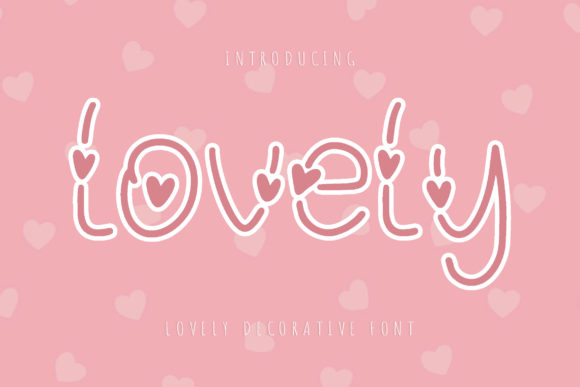
In a digital landscape saturated with sterile, utilitarian typefaces, finding a font that genuinely resonates with emotion can feel like discovering a hidden gem. Lovely is an adorable and stylish decorative font, featuring sweet little hearts as ornaments. It will add an incredibly joyful touch to each of your beautiful projects. This isn't just about picking a pretty typeface; it is about understanding how specific visual cues influence human perception and emotional response.
For professionals, creators, and small business owners, typography is often the silent ambassador of a brand. When you choose Lovely, you are making a deliberate choice to soften the tone of your communication. The presence of heart ornaments within the letterforms creates an immediate sense of warmth and approachability that standard sans-serif or serif fonts simply cannot replicate. This distinction matters significantly when you are trying to connect with an audience on a personal level.
The Psychology of Playful Typography
Understanding why Lovely works requires looking at the psychology behind design choices. Humans are wired to respond to familiar, organic shapes. The subtle inclusion of heart motifs triggers a positive emotional association, signaling care, affection, and friendliness. This is particularly effective for brands in the lifestyle, wellness, beauty, and education sectors where trust and empathy are paramount.
When you use this font for a blog post title or a social media graphic, you are essentially lowering the barrier to entry for your reader. A dry, corporate headline might cause a user to scroll past, but a headline styled with Lovely invites them in. It suggests that the content within is not just information, but something crafted with thoughtfulness. This psychological shift can lead to higher engagement rates, as users feel more comfortable interacting with content that feels human-centric rather than machine-generated.
Bridging Professionalism and Personality
A common misconception among entrepreneurs is that playful fonts lack professional credibility. However, context is everything. In the modern creative economy, authenticity is a currency more valuable than rigid formality. Lovely strikes a unique balance. While it is undeniably whimsical, its structured letterforms maintain readability even at smaller sizes. This makes it suitable for headlines, pull quotes, and accent text without sacrificing legibility.
Consider a freelance graphic designer pitching a rebranding package to a boutique coffee shop owner. Using a standard Helvetica might look safe, but it fails to capture the cozy, inviting atmosphere of a local café. Introducing Lovely into the mockup immediately communicates the desired vibe. It shows the client that the designer understands the emotional core of their business. This ability to translate abstract feelings into concrete visual elements is a hallmark of skilled design work.
Practical Applications for Modern Creators
The versatility of Lovely extends far beyond simple decoration. Its specific characteristics make it a powerful tool for solving common design challenges related to hierarchy and emphasis. Here is how different types of users can leverage this font to improve their workflow and outcomes.
- Content Marketers and Bloggers: In an era of information overload, capturing attention is difficult. Using Lovely for subheadings or featured image overlays can break up dense blocks of text. The heart ornaments act as visual anchors, guiding the eye through the article and encouraging readers to stay longer. This improved dwell time is a key metric for search engine optimization and user retention.
- Social Media Managers: Visual consistency is crucial for building a recognizable brand identity. Incorporating Lovely into templates for Instagram stories or Pinterest pins creates a cohesive aesthetic that stands out in a crowded feed. The "joyful touch" mentioned in its description translates directly to higher shareability, as users are more likely to repost content that evokes a positive feeling.
- Educators and Presenters: Teaching materials often suffer from being too dry. Whether creating lesson plans, worksheets, or slide decks, using Lovely for titles can make learning materials feel less intimidating. For educators working with younger audiences or parents, this font signals that the environment is supportive and nurturing.
- Small Business Owners: For those selling handmade goods, greeting cards, or personalized gifts, the font serves as a direct extension of the product's value proposition. It reinforces the idea of craftsmanship and personal touch, which are critical selling points in the e-commerce space.
Enhancing Communication Efficiency
One of the most underrated benefits of using Lovely is the reduction of cognitive load. When a document or presentation looks visually appealing, the brain processes the information more easily. The decorative elements do not distract; rather, they provide a rhythmic structure to the text. This allows the audience to focus on the message rather than struggling to decode a monotonous layout.
Furthermore, the font simplifies decision-making for designers. Instead of spending hours searching for clip art or icons to add a touch of personality, the ornamentation is built directly into the characters. This streamlines the design process, allowing professionals to produce high-quality assets faster. Time saved on asset creation can be redirected toward strategy, research, or client communication, ultimately increasing overall efficiency.
Strategic Considerations and Limitations
While Lovely offers significant advantages, it is not a one-size-fits-all solution. Effective design relies on knowing when to apply a tool and when to hold back. The very features that make this font charming—its decorative nature and heart motifs—can also limit its utility in certain contexts.
It is important to recognize that Lovely is best suited for display purposes rather than body text. Using it for long paragraphs can reduce readability and fatigue the reader's eyes. The ornamental details may become cluttered at small point sizes, making the text difficult to decipher. Therefore, the most effective strategy is to pair it with a clean, neutral sans-serif font for body copy. This combination leverages the strengths of both: the personality of Lovely for impact and the clarity of a standard font for comprehension.
Additionally, consider the industry standards of your target audience. If you are designing for a financial institution, a law firm, or a medical provider, the whimsical nature of Lovely might undermine the authority and seriousness required in those fields. In such cases, it should be used sparingly, perhaps only for internal newsletters or community events, rather than official communications. Always evaluate the brand voice before committing to a typeface.
Integrating Joy into Your Workflow
The ultimate goal of incorporating Lovely into your projects is to elevate the quality of your output without compromising functionality. By choosing fonts that align with your intended emotional message, you create a more immersive experience for your audience. This alignment between visual style and content purpose is what separates good design from great design.
Whether you are launching a new website, designing a marketing campaign, or creating educational resources, taking the time to select the right typography pays dividends. Lovely provides a ready-made solution for adding character and warmth, ensuring that your projects stand out in a meaningful way. As you continue to refine your design toolkit, remember that every element, down to the smallest ornament, plays a role in how your message is received. Embracing fonts that bring joy can transform a routine task into a creative opportunity.
Ultimately, the decision to use Lovely comes down to the story you want to tell. If that story involves connection, happiness, and creativity, this font is an invaluable ally. It transforms static text into a living, breathing part of your narrative, proving that even in a digital world, there is still room for sweetness and style.