Play Trophy: Why This Decorative Font Is a Game-Changer for Your Projects
If you have ever struggled to find a typeface that balances bold personality with professional readability, you are likely familiar with the frustration of settling for generic options. Play Trophy emerges as an incredibly cool and interestingly designed decorative font that solves this exact problem. Whether you are crafting physical items, designing digital assets, creating presentations, or making greeting cards, it offers a level of character that standard fonts simply cannot match. However, acquiring the right tool is only half the battle; using it correctly requires a shift in perspective.
Many designers and creators rush to download a new font without considering how its unique structure impacts their specific workflow. With Play Trophy, the visual impact is immediate, but the real value lies in understanding where it shines and where it might cause unintended issues. This guide cuts through the noise to help you make informed decisions about integrating this distinctive typeface into your work.
The Allure of Play Trophy and Its Unique Design Language
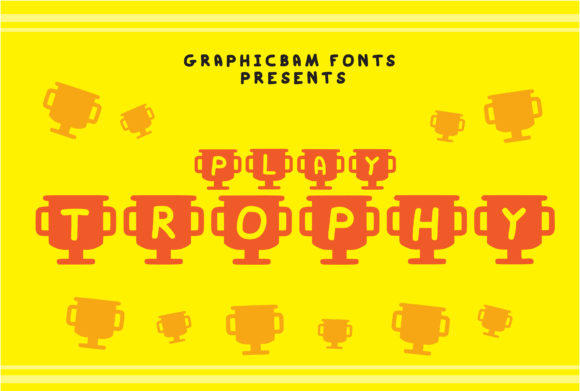
What makes Play Trophy stand out in a sea of serif and sans-serif options? It is not just another bold display font; it possesses a structural integrity that mimics the feeling of achievement and celebration. The letterforms are crafted with distinct curves and sharp angles that give them a three-dimensional feel, even on a flat screen. This design philosophy appeals to entrepreneurs and marketers who need to grab attention instantly without sacrificing elegance.
For hobbyists and small business owners, this font acts as a visual shortcut. Instead of spending hours adding drop shadows, gradients, or borders to text to make it pop, Play Trophy does the heavy lifting for you. When used in greeting cards or event invitations, it conveys a sense of importance and festivity naturally. However, beginners often mistake this "pop" for a lack of sophistication. It is crucial to understand that while the font is playful, it retains a level of polish that prevents it from looking cheap.
Common Pitfalls in Choosing and Applying Decorative Fonts
Even with such a compelling option as Play Trophy, users frequently fall into traps that diminish the quality of their final output. One of the most common mistakes is over-reliance on the font for body text. Because Play Trophy is a decorative display typeface, attempting to use it for long paragraphs of text can lead to eye strain and reduced readability. The intricate details that make it beautiful also create visual clutter when scaled down or used in high densities.
Another frequent error involves ignoring the context of the medium. A font that looks stunning on a high-resolution digital banner may lose its definition when printed on textured paper or applied to a small craft tag. Users often overlook the resolution requirements of the file format before purchasing or downloading. If you do not check the hinting and vector quality of the font files, you risk ending up with pixelated edges that ruin the crispness of the design.
Furthermore, there is the issue of compatibility. Some creators assume all fonts work seamlessly across every software platform. While Play Trophy is generally well-optimized, older versions of design software or certain web browsers may not render the ligatures or special characters correctly. This can lead to broken text in your final presentation or website, forcing you to redo hours of work. Always verify that the font supports the specific language and character set you need before committing to a project.
How Mistakes Impact Your Results and Efficiency
The consequences of these oversights go beyond simple aesthetics; they directly affect your efficiency and the perceived quality of your brand. If you use Play Trophy for a legal contract or a dense educational handout, the message gets lost in the style. The audience focuses on the shape of the letters rather than the content, which undermines your authority and communication goals.
In the realm of marketing, poor font choices can damage trust. A logo or headline that appears too whimsical for a serious industry can confuse potential customers. Conversely, if you fail to utilize the full potential of Play Trophy by scaling it too small, you waste the investment. You paid for a premium look, but the result looks like a low-quality placeholder. This disconnect between expectation and reality leads to dissatisfaction and wasted resources.
Cost is another factor often overlooked. Buying a font license without reading the terms can be expensive. Some licenses restrict usage to print only, while others limit the number of projects. If you plan to use Play Trophy for both a physical product line and a digital ad campaign, ensure your license covers both scopes. Otherwise, you may face legal complications or unexpected fees later.
Practical Advice for Smart Implementation
To avoid these pitfalls, start by defining the hierarchy of your design. Use Play Trophy for headlines, logos, and key call-to-action buttons where its personality can shine. Pair it with a clean, neutral sans-serif font for body text to maintain balance. This contrast ensures that the decorative elements enhance the message rather than overpower it.
Before finalizing any design, always test the font at the intended size and medium. Print a sample page or view the design on different devices to check for rendering issues. If you are working with clients, show them a mockup that includes the font in various contexts. This helps manage expectations and ensures everyone agrees on the visual direction.
When downloading or purchasing, read the license agreement carefully. Look for information regarding commercial use, modification rights, and distribution limits. Many reputable sources offer free trials or demo versions. Test these thoroughly to ensure the character set meets your needs before buying the full package. This simple step can save you from headaches down the road.
Evaluating Your Decision Before You Commit
Ultimately, the decision to use Play Trophy should be driven by the specific needs of your project. Ask yourself: Does this project require a touch of celebration and flair? Will the audience respond better to a bold, unique voice? If the answer is yes, then this font is an excellent choice. If the goal is minimalism or strict corporate branding, you might want to reconsider.
Consider the versatility of the font family. Does it come in multiple weights or styles? Having options allows you to adapt the design to different situations without switching typefaces. Check if the creator provides regular updates or support. Active development often means better compatibility with future software versions and more features.
By approaching Play Trophy with a clear strategy, you can leverage its strengths while avoiding common errors. Whether you are a freelancer pitching a new brand identity, an educator creating engaging worksheets, or a marketer launching a holiday campaign, this font offers a versatile toolkit for success. Remember, the best design is not just about using the coolest tools, but about applying them wisely to achieve your specific goals.
Take the time to explore the nuances of the font, experiment with pairing it, and respect its limitations. In doing so, you will unlock the true potential of Play Trophy and elevate the quality of your creative output significantly.