Hope: A Unique Typeface for Design Projects Centered on Support and Resilience
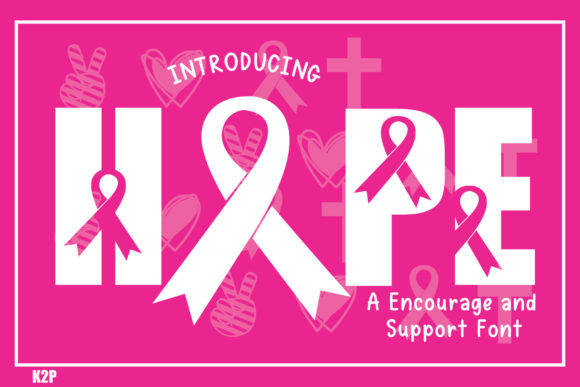
When selecting typography for a project that addresses sensitive topics like cancer awareness, the choice of font extends far beyond mere aesthetics. It becomes a critical component of the message itself. Hope is a thick lettered and incredibly unique decorative font designed specifically to convey strength, warmth, and community. Unlike standard serif or sans-serif typefaces that prioritize neutrality, this font carries an inherent emotional weight that can elevate design ideas related to support groups, fundraising campaigns, and educational materials.
The distinctiveness of Hope lies in its robust character and the specific way it interacts with white space. Its heavy strokes provide a sense of stability, which is often what audiences need when engaging with content about health challenges. However, choosing the right tool requires understanding how it fits into the broader landscape of design resources. This evaluation explores the practical applications, technical capabilities, and strategic tradeoffs of using this unique typeface compared to other available options.
Understanding the Distinctive Nature of Hope
At its core, Hope is not just a font; it is a statement. The thick lettering style immediately commands attention without feeling aggressive. In the context of projects seeking to bring support for people suffering from cancer, this visual presence acts as a pillar of reliability. When a viewer sees headlines set in this typeface, they are likely to perceive the information as grounded and serious, yet approachable.
This font stands apart from typical display fonts that might rely on thin lines or intricate flourishes that can feel fragile. Instead, Hope utilizes substantial weight to create a feeling of embrace. For designers working on brochures for patient advocacy or banners for charity runs, this characteristic ensures that the message of solidarity is visually reinforced. The unique curves and terminals of the letters add a human touch, preventing the design from looking too corporate or sterile.
However, the uniqueness of Hope also dictates where it should be used. Its bold nature makes it less suitable for body text that requires high readability over long passages. It excels in headlines, pull quotes, and key messaging areas where immediate impact is necessary. Understanding this limitation is crucial for making an informed decision about whether this font aligns with your specific project goals.
Technical Advantages: PUA Encoding Explained
One of the most significant practical benefits of using Hope is its encoding method. This font is PUA encoded, which stands for Private Use Area encoding. For designers who have worked with various software environments, this feature offers a level of flexibility that standard Unicode fonts often lack.
PUA encoding allows you to access all of the glyphs and swashes with ease. In many traditional font systems, special characters, ligatures, or stylistic alternates are buried in complex menus or require specific keyboard shortcuts that can interrupt the creative flow. With Hope, these elements are mapped to accessible slots within the font file. This means that adding decorative swashes or alternative character forms is a straightforward process, often involving simple selection tools rather than navigating obscure code points.
This accessibility is particularly valuable when creating custom layouts for non-profit organizations that may not have dedicated graphic designers on staff. Staff members can easily modify designs to include unique touches that enhance the emotional resonance of the campaign without needing advanced typographic skills. The ability to quickly toggle between standard characters and decorative variants ensures consistency while allowing for creative expression.
Evaluating Alternatives and Comparing Styles
When researching options for a campaign focused on health support, designers often encounter a wide array of choices ranging from clean geometric sans-serifs to warm, handwritten scripts. How does Hope compare to these categories? The answer depends largely on the specific tone the project needs to convey.
Comparison with Handwritten Scripts: Many designers turn to script fonts to evoke a sense of personal care and empathy. While scripts are excellent for conveying intimacy, they can sometimes appear too casual or difficult to read for important informational content. Hope offers a middle ground. It retains a decorative quality that feels hand-crafted but maintains the structural integrity of a block letter. This makes it more versatile for headers where legibility is paramount, yet it still avoids the coldness of a machine-generated font.
Comparison with Standard Display Fonts: Generic display fonts are often chosen for their versatility and availability. However, they frequently lack the specific thematic connection that Hope provides. A standard bold font might communicate "attention," but it rarely communicates "support" or "resilience" in the same way. By choosing Hope, a designer is making a deliberate decision to align the visual identity with the mission of the organization. The tradeoff here is specificity; while Hope is perfect for this niche, it may be too stylized for a general-purpose business website.
Comparison with Minimalist Typefaces: In modern web design, minimalism is a dominant trend. Clean, thin fonts are popular for their clarity. If a project aims for a clinical, medical look, a minimalist font would be the logical choice. However, if the goal is to humanize the experience of illness and highlight the community aspect of recovery, Hope serves as a powerful counterpoint. It brings color and texture to a design that might otherwise feel too stark.
Strategic Fit: When to Choose Hope
Determining whether Hope is the right choice involves evaluating the specific needs of the audience and the medium of delivery. This font is best suited for situations where emotional connection is the primary objective.
- Campaign Materials: For posters, flyers, and social media graphics promoting cancer awareness events, the thick lettering ensures the message is visible from a distance and conveys urgency and strength.
- Donation Pages: Using Hope for call-to-action buttons or headline sections on fundraising pages can increase engagement by framing the donation as an act of solidarity rather than a transaction.
- Community Newsletters: While not ideal for the entire text, using this font for section headers in newsletters can break up monotony and signal a shift in tone towards a more supportive narrative.
In these scenarios, the unique character of the font helps distinguish the organization from others that may use generic templates. It signals to the reader that the content has been curated with care.
Limitations and Considerations
No single typeface is a universal solution, and Hope is no exception. Its decorative nature means it requires careful pairing. It generally performs best when combined with a neutral, highly readable body font. Attempting to use Hope for large blocks of text will result in eye strain and reduced comprehension, which defeats the purpose of communicating vital health information.
Furthermore, while the PUA encoding simplifies access to swashes, it is essential to ensure that the font files are correctly installed across all devices and browsers intended for the final output. Because PUA characters are not part of the standard Unicode set, there is a small risk of fallback issues if the target audience is viewing the content on older systems or specific mobile platforms that do not recognize the private mapping. Designers must test their layouts thoroughly before publication to ensure the decorative elements render as intended.
Additionally, the bold weight of the font can consume significant vertical space. In formats with strict layout constraints, such as mobile app interfaces or narrow email templates, the size of the letters may need to be scaled down, which could diminish their impact. In such cases, designers might need to reconsider if the visual identity of Hope is compatible with the spatial limitations of the platform.
Making an Informed Decision
Selecting a typeface is a strategic decision that impacts the perceived credibility and emotional reach of a project. Hope offers a compelling option for those looking to infuse their work with a sense of resilience and collective strength. Its thick lettering and unique design make it stand out in a sea of generic typography, while its PUA encoding provides the technical freedom needed for detailed customization.
For professionals comparing options, the key takeaway is to match the font's personality to the project's intent. If the goal is to create a visual anchor for a cause that relies on community support and emotional engagement, Hope is a strong candidate. However, if the project prioritizes data density, clinical precision, or extreme minimalism, other options may serve better.
Ultimately, the success of a design lies in how well the typography supports the content. By leveraging the unique attributes of Hope—its weight, its encoding, and its distinctive style—designers can create materials that not only inform but also inspire. Whether used for a local support group or a national awareness campaign, this font provides a foundation for communication that is both sturdy and deeply human.
Before committing to a full rebrand or major campaign overhaul, it is advisable to create mockups using Hope alongside potential alternatives. Testing the font in real-world contexts will reveal how it handles different screen sizes and print resolutions. This practical testing phase is an essential step in the evaluation process, ensuring that the final choice delivers on its promise of bringing support and hope to those who need it most.