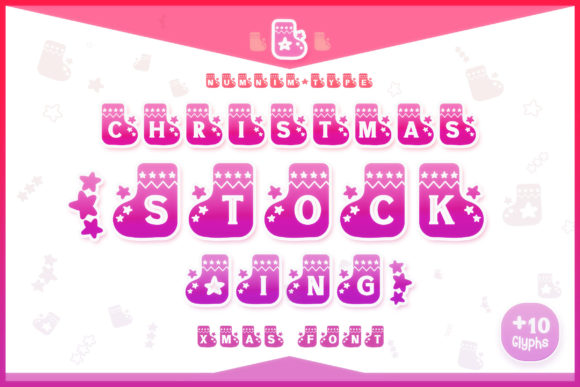
Christmas Stocking: A Festive and Joyful Decorative Font for Your Holiday Designs
There is a specific magic that happens when you replace standard text with Christmas Stocking. It instantly transforms a plain email, a simple invitation, or a basic social media post into something that feels warm, personal, and deeply festive. This decorative font is not just another typeface; it is a visual shorthand for holiday cheer, capturing the spirit of winter wonderlands, cozy firesides, and joyful gatherings. Whether you are a small business owner preparing seasonal promotions, a blogger crafting holiday wish lists, or an educator creating classroom decorations, choosing the right typography can make all the difference in how your message is received.
However, while the aesthetic appeal of Christmas Stocking is undeniable, using it effectively requires more than just downloading a file and applying it to your design. Many creators fall into the trap of overusing decorative fonts or ignoring technical details that can ruin the final presentation. To help you avoid these common pitfalls, let us explore what makes this font special, where beginners often stumble, and how to ensure your designs remain professional and readable.
Understanding the Appeal of Christmas Stocking
The primary reason designers gravitate toward Christmas Stocking is its ability to evoke emotion. Unlike rigid, geometric sans-serifs, this font features playful curves, flourishes, and a handwritten feel that mimics the act of writing a letter by hand. It suggests intimacy and care. When used correctly, it signals to the reader that the content was crafted with attention to detail and heart.
This versatility extends beyond just holiday greetings. Because of its charming aesthetic, many professionals use it for wedding invitations, baby shower announcements, and even branding for boutique businesses that want to project a cozy, artisanal vibe. The font acts as a bridge between modern digital communication and traditional craftsmanship. However, its strength lies in its specificity; it is best used when the context calls for warmth and personality.
Common Mistakes When Using Decorative Fonts
Even experienced designers sometimes struggle with balancing style and substance. One of the most frequent errors is treating Christmas Stocking as a body text solution. While it looks beautiful in headlines, attempting to set long paragraphs in this font creates a visual nightmare. The intricate details and varying stroke widths become difficult to track with the eye, leading to reader fatigue and a significant drop in comprehension.
If you force readers to squint through dense blocks of decorative text, they are likely to disengage entirely. In a marketing context, this means lost sales. In an educational setting, it means students missing key information. The solution is simple but often overlooked: reserve Christmas Stocking for short phrases, titles, and accents. Pair it with a clean, highly legible sans-serif or serif font for any substantial amount of reading material.
Another critical oversight involves the resolution and quality of the font file itself. Not all downloadable fonts are created equal. Some free versions found on random websites may be low-resolution bitmaps rather than scalable vector outlines. When you try to resize these poor-quality files, they appear pixelated or jagged, which undermines the very "hand-crafted" look you are trying to achieve. A blurry logo on a printed flyer looks unprofessional, regardless of how cute the font design is.
Evaluating Quality Before You Download
Before you commit to using Christmas Stocking, you must evaluate the source. Are you downloading from a reputable marketplace like Creative Market, Adobe Fonts, or a trusted independent designer? Or are you grabbing a file from an unverified link? The difference is stark. Reputable sources provide full character sets, including uppercase, lowercase, numbers, and special punctuation marks. They also offer proper kerning pairs, ensuring that letters like "A" and "V" sit comfortably next to each other without awkward gaps.
When evaluating a font, check for ligatures and alternate characters. High-quality decorative fonts often include special glyphs that connect letters or offer alternative shapes for a more natural flow. If you find that your "and" symbol looks clunky or your quotation marks are square instead of curly, the font might be incomplete or poorly engineered. These small details contribute significantly to the overall polish of your design.
Additionally, consider the licensing terms. Many users assume that because a font is free to download, it is free to use commercially. This is rarely the case. Using a font intended for personal use only in a paid advertisement or on a product packaging can lead to legal issues and financial penalties. Always read the license agreement carefully to understand if you need a commercial license, a desktop license, or a web font license.
Technical Considerations for Web and Print
The medium matters immensely. What works beautifully on a high-resolution screen might fail miserably when printed. Christmas Stocking often relies on thin lines and delicate swashes. On a standard printer, these thin strokes might disappear or break up, especially if the paper quality is poor. To avoid this, test your design at 100% scale before sending it to print. Adjust the weight of the font if necessary, or increase the contrast to ensure the details survive the printing process.
For web usage, embedding decorative fonts can slow down page load times if the file size is too large. Furthermore, if a user's device does not support the specific font format, the browser will revert to a default system font, potentially ruining your layout. Ensure you have a robust fallback strategy. Use CSS to specify a similar-looking font family as a backup so that if Christmas Stocking fails to load, the design still retains some of its intended character rather than looking broken.
Practical Strategies for Better Results
To maximize the impact of Christmas Stocking, focus on contrast and hierarchy. Let the decorative font shine by giving it space to breathe. Avoid cluttering the design with too many competing elements. If you use Christmas Stocking for your main headline, keep the subheadings and body text minimal and neutral. This approach guides the viewer's eye naturally through the content without causing visual chaos.
Color choice is another factor that influences success. Dark colors like deep reds, forest greens, or navy blues work well against light backgrounds to maintain readability. Conversely, using light yellow or white text on a busy background will render the font illegible. Remember that the goal is communication, not just decoration. If the recipient cannot read your holiday wishes or your business offer, the aesthetic effort is wasted.
- Check Legibility: Always zoom out to see if the text remains clear at smaller sizes.
- Verify Licensing: Ensure you have the right permissions for your specific use case (personal vs. commercial).
- Test Outputs: Print a sample or view on different devices to catch rendering issues early.
- Pair Wisely: Combine with simple, clean fonts to balance the visual weight.
By approaching Christmas Stocking with these practical considerations, you move beyond simply making things look "pretty" to creating designs that are effective, professional, and truly engaging. Whether you are sending a heartfelt letter to a client or launching a holiday campaign for your brand, taking the time to get the typography right ensures your message resonates with the joy and warmth that the season demands.
Ultimately, the best design choices are those that serve the audience first. Use Christmas Stocking to enhance your communication, not to obscure it. With careful selection, proper testing, and thoughtful application, this festive font can become a powerful tool in your creative arsenal, helping you connect with others in meaningful and memorable ways.