Choosing the Right Visual Voice: A Deep Dive into Be Breast Beware Vol.2
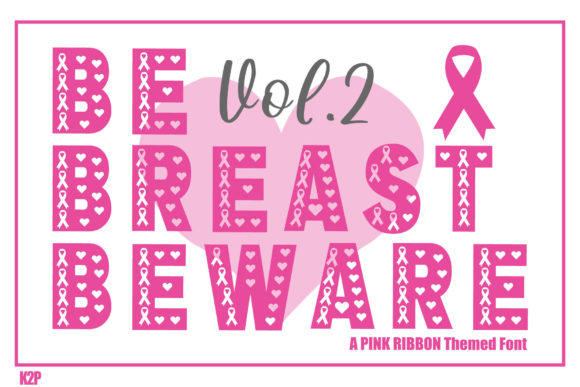
Selecting the appropriate typography for a cause-driven project requires more than just finding a font that looks good on paper; it demands a typeface that carries weight, conveys urgency, and honors the gravity of the subject matter. For designers, crafters, and organizations working within the breast cancer awareness space, the visual language must strike a delicate balance between strength and empathy. This is where Be Breast Beware Vol.2 emerges as a significant option in the design ecosystem. It is not merely a decorative script but a thick-lettered, unique font specifically engineered to support projects ranging from local charity runs to educational pamphlets.
The decision to adopt this specific typeface involves understanding its technical capabilities, its aesthetic impact, and how it fits into the broader landscape of available design resources. When evaluating tools for awareness campaigns, professionals often look for fonts that are distinct yet legible. Be Breast Beware Vol.2 offers a solution that prioritizes boldness without sacrificing the artistic flair necessary to capture attention in a crowded digital or physical environment.
Understanding the Distinctive Character of Be Breast Beware Vol.2
At its core, Be Breast Beware Vol.2 is defined by its substantial stroke width and its highly stylized, decorative nature. Unlike standard sans-serif or serif fonts that aim for neutrality, this typeface makes an immediate statement. The "thick-lettered" quality ensures that headlines and key messages stand out, which is crucial when the goal is to stop a viewer in their tracks and deliver a critical message about health and prevention.
What sets this font apart from generic decorative options is its thematic cohesion. Every curve and flourish feels intentional, designed to evoke a sense of movement and solidarity often associated with ribbon campaigns. However, the true power of this tool lies in its accessibility through PUA encoding. Personal Use Area (PUA) encoding allows the font to access a vast library of glyphs, swashes, and alternate characters that are not typically found in standard Unicode mappings.
This technical feature transforms the user experience significantly. In traditional font usage, accessing special symbols might require complex workarounds or result in missing character boxes. With PUA encoding, users can access all glyphs and swashes with ease, ensuring that the final output remains consistent and professional. Whether a designer needs a specific decorative ligature or a unique symbol to replace a standard letter, the full range of the font's potential is unlocked immediately.
The Impact of Decorative Typography on Awareness Campaigns
When discussing the utility of Be Breast Beware Vol.2, one must consider the psychological impact of typography on the audience. In the context of breast cancer awareness, the font choice can influence how the message is received. A thin, elegant script might convey grace, but it may lack the assertiveness needed for urgent calls to action. Conversely, a blocky, industrial font might feel too cold.
Be Breast Beware Vol.2 occupies a middle ground that is both approachable and commanding. Its thick strokes suggest stability and reliability, while the decorative elements add a human touch. This duality is essential for projects that aim to inform without overwhelming the reader. For instance, on a t-shirt or a poster, the font's density ensures visibility from a distance, while the intricate details reward closer inspection, encouraging engagement with the content.
Evaluating Alternatives and Design Categories
No single font is a universal solution, and understanding where Be Breast Beware Vol.2 fits requires comparing it against other categories of typefaces used in social advocacy. Designers typically navigate three main categories when selecting fonts for health-related projects: utilitarian sans-serifs, classic serifs, and decorative display fonts.
- Utilitarian Sans-Serifs: These are often chosen for readability and clarity. While excellent for long-form text and medical data, they frequently lack the emotional resonance required for branding and event promotion. They are functional but rarely memorable.
- Classic Serifs: These fonts convey tradition and trustworthiness. They are excellent for reports and formal documents but can sometimes appear too conservative for modern, grassroots awareness initiatives that seek to energize younger demographics.
- Decorative Display Fonts: This category includes Be Breast Beware Vol.2. These fonts are designed for headlines and short bursts of text. They prioritize style over high-volume reading.
When comparing Be Breast Beware Vol.2 to other decorative options, the primary differentiator is the combination of thickness and specialized encoding. Many decorative fonts suffer from poor kerning or limited glyph sets, making them difficult to use for custom layouts. The PUA encoding of Be Breast Beware Vol.2 addresses these limitations, offering a level of customization that rivals proprietary software solutions.
Tradeoffs Between Flexibility and Readability
Every design choice involves tradeoffs. The most significant consideration when using Be Breast Beware Vol.2 is the limitation on body text. Because of its highly stylized and thick nature, this font is not suitable for paragraphs of instructional text or detailed medical information. Attempting to read dense blocks of this typeface can lead to eye strain and reduced comprehension.
This limitation is not a flaw but a feature of its design philosophy. It forces the designer to structure content hierarchically, reserving the font for titles, slogans, and focal points. In contrast, a more neutral font might encourage a monotonous layout where everything competes for attention. By restricting the use of Be Breast Beware Vol.2 to key areas, designers can create a more dynamic and effective visual hierarchy.
Furthermore, the uniqueness of the font presents a potential challenge regarding brand recognition. If a campaign relies heavily on this specific typeface, there is a risk that the font itself becomes the brand rather than the organization behind it. Successful implementation requires balancing the font's strong presence with clean, supporting typography that grounds the design.
Determining the Best Fit for Your Project
Deciding whether to incorporate Be Breast Beware Vol.2 into a project depends heavily on the medium and the intended outcome. It is a powerful tool, but like any tool, it must be applied to the right task. Understanding the specific strengths and limitations helps in making an informed decision that aligns with the project's goals.
This font is ideally suited for merchandise and apparel. The thick lettering holds up well to screen printing and embroidery, ensuring that the message remains crisp even after washing or wear. On t-shirts, tote bags, and wristbands, the decorative elements add a layer of personality that plain text cannot achieve. The PUA encoded swashes allow for creative variations that make each item feel unique and handcrafted.
Similarly, event signage and banners benefit greatly from this typeface. At a 5K run or a community fundraiser, people scan materials quickly. The boldness of Be Breast Beware Vol.2 cuts through visual clutter, drawing the eye to the date, location, and cause. The decorative style adds a festive yet serious tone appropriate for fundraising galas or awareness walks.
However, there are scenarios where this font would be less effective. For digital interfaces requiring high-speed scanning, such as mobile apps or news feeds, the complexity of the letters might slow down processing time for the user. In these contexts, a simpler, cleaner font is often preferred to ensure accessibility and speed. Additionally, for legal disclaimers or detailed medical instructions, the decorative nature of the font is inappropriate and could undermine the perceived authority of the information.
Practical Application Strategies
To maximize the effectiveness of Be Breast Beware Vol.2, designers should focus on pairing it correctly. Using this font alongside a simple, geometric sans-serif creates a harmonious contrast. The decorative font handles the emotional appeal, while the neutral font provides the necessary clarity for details. This combination leverages the strengths of both styles, creating a cohesive visual identity.
Another practical consideration is the color palette. The thick strokes of the font interact differently with various colors. High-contrast combinations, such as black on white or deep pink on cream, tend to yield the best results. The PUA encoded glyphs often have varying line weights, so ensuring sufficient contrast is vital to prevent the finer details from disappearing.
Making an Informed Decision
The landscape of design resources for breast cancer awareness is vast, but few options offer the specific combination of thematic relevance, technical flexibility, and visual impact provided by Be Breast Beware Vol.2. For professionals seeking a font that respects the seriousness of the cause while delivering a memorable aesthetic, this typeface stands out as a robust candidate.
Ultimately, the choice comes down to the specific needs of the project. If the goal is to create a striking visual identity for merchandise, events, or promotional graphics where brevity and impact are paramount, Be Breast Beware Vol.2 is an excellent choice. Its PUA encoding removes many technical barriers, allowing for creative freedom that is often restricted in standard font libraries.
Conversely, if the project prioritizes extensive reading, data visualization, or accessibility across diverse devices, a more utilitarian font may be the superior choice. By understanding these distinctions, designers can avoid the common pitfall of forcing a decorative font into a role it was never meant to play. The key to success lies in matching the tool to the task, ensuring that the visual voice of the campaign amplifies the message rather than distracting from it.
In conclusion, Be Breast Beware Vol.2 represents a thoughtful addition to the toolkit of anyone involved in breast cancer awareness efforts. It bridges the gap between artistic expression and functional communication, offering a unique way to honor the cause. Whether used for a single flyer or a comprehensive branding package, its thick, distinctive letters serve as a powerful reminder of the importance of the mission at hand.